
Preparing for a Macular Degeneration Visit in White Plains: Vision Changes and Questions to Bring

Changes in your central vision can make everyday activities like reading, driving, and recognizing faces more difficult. If you have noticed blurry vision, distorted lines, or difficulty seeing fine details, scheduling a macular degeneration evaluation can help identify the cause.
At Westchester Eyes in White Plains, we provide comprehensive eye examinations to assess your retinal health and detect changes associated with age-related macular degeneration (AMD). Knowing what to expect and what information to bring can help you make the most of your appointment.
Recognizing Vision Changes Associated With Macular Degeneration
Macular degeneration affects the macula, the central portion of the retina responsible for sharp, detailed vision. While early stages may not cause noticeable symptoms, certain changes can indicate that further evaluation is needed.
Common warning signs include blurry central vision, straight lines appearing wavy, difficulty reading small print, and dark or blurry spots near the center of your sight. You may also notice that colors appear less vibrant or that you need brighter lighting when reading.
These symptoms can have several causes, so a comprehensive eye examination is important. New visual distortion, central blind spots, or sudden vision changes require prompt medical attention rather than waiting for a routine appointment.
What Should You Bring to Your Macular Degeneration Appointment?
Preparing for your macular degeneration visit in White Plains helps us better understand your symptoms, medical history, and potential risk factors.
We recommend bringing the following information:
• A list of vision changes: Note when symptoms began, whether they affect one or both eyes, and if they have worsened.
• Your current glasses or contact lenses: Bring your usual eyewear so we can evaluate your vision needs.
• Medications and supplements: Include prescription medications, over-the-counter products, and any eye health vitamins.
• Family and medical history: Mention relatives with macular degeneration, smoking history, and relevant health conditions.
• Questions about your vision: Write down concerns about symptoms, testing, treatment, or long-term monitoring.
Having this information available allows us to make your appointment more productive and provide recommendations based on your individual needs.
What Happens During a Macular Degeneration Evaluation?
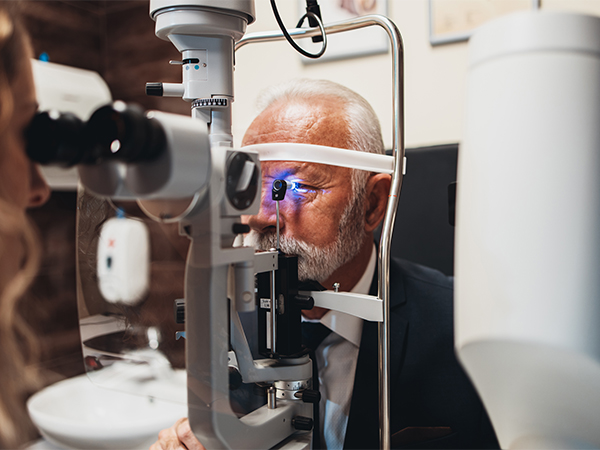
During your visit, we assess your vision and examine the retina for changes associated with AMD. Your evaluation may include visual acuity testing, a dilated retinal examination, and diagnostic imaging such as optical coherence tomography (OCT), depending on your findings.
These tests help identify changes in the macula, evaluate retinal structures, and determine whether additional testing or specialist care is necessary. Because dilation can temporarily blur your vision and increase light sensitivity, consider arranging transportation if needed.
Important Questions to Ask Your Eye Doctor
Understanding your results is an important part of managing macular degeneration. During your appointment, consider asking whether there are signs of AMD, what stage may be present, and how often your eyes should be monitored.
You can also ask whether an Amsler grid would be useful for monitoring changes at home, whether AREDS2 supplements are appropriate for your specific findings, and what symptoms require immediate attention.
If macular degeneration is diagnosed, we can explain the findings, discuss monitoring recommendations, and coordinate specialist care when appropriate.
Why Regular Monitoring Matters
Macular degeneration can progress without obvious symptoms, particularly in its early stages. Regular retinal examinations allow us to document changes and recommend follow-up care based on your eye health. At Westchester Eyes, we emphasize early detection, patient education, and personalized monitoring to help patients in White Plains make informed decisions about protecting their central vision.
Schedule your macular degeneration evaluation with Westchester Eyes at our White Plains - South office, located at 15 North Broadway, Suite 1A, White Plains, NY 10601, by calling (914) 946-4100.
All Eye
Care Services

Keep
In Touch

© 2026 Westchester Eyes. All rights Reserved. Accessibility Statement - Privacy Policy - Sitemap
Powered by: