
Macular Degeneration
Macular degeneration is not the same for every patient. The condition can vary in type, severity, and rate of progression, which is why effective care requires more than identifying symptoms alone.
At Westchester Eyes, our approach begins with understanding what is happening within the macula, the part of the retina responsible for sharp central vision. Using objective diagnostic testing, we evaluate the structure and health of the retina, document subtle changes, and develop a personalized monitoring plan based on your individual findings. Our goal is to identify signs of macular degeneration as early as possible, closely track changes over time, and help you make informed decisions about your eye health.
What Is Macular Degeneration?
Macular degeneration is an eye condition that affects central vision. It most commonly develops with age and can make reading, driving, recognizing faces, and seeing fine details more difficult.
Some patients experience blurred or distorted central vision, while others have no noticeable symptoms during the early stages. The condition may progress gradually, but certain forms can change more quickly.
Because symptoms do not always reflect the extent of retinal changes, objective diagnostic testing is an important part of evaluating macular degeneration. A comprehensive retinal assessment allows our doctors to determine the type and severity of the condition rather than relying on symptoms alone.
Signs You Should Not Ignore
Schedule an eye exam if you experience:
Blurry or distorted central vision
Straight lines that appear wavy or bent
Dark, blurry, or blank areas in your central vision
Difficulty reading small print
Trouble recognizing faces
An increased need for brighter lighting
Changes in color perception or contrast sensitivity
Even mild vision changes should be evaluated, especially when they appear suddenly or become progressively worse.
An Objective Approach to Diagnosis
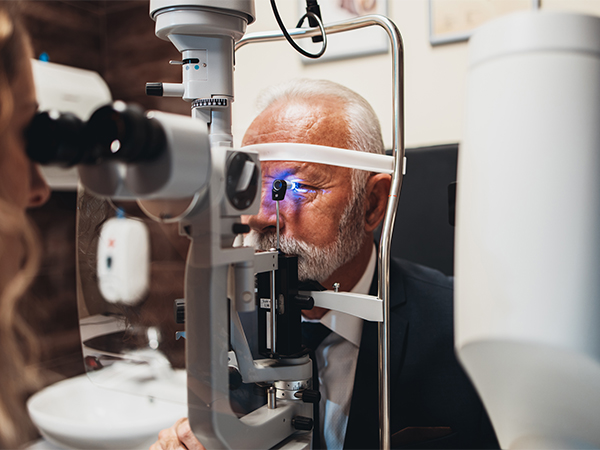
At Westchester Eyes, diagnosing macular degeneration begins with a detailed medical eye exam and retinal evaluation. We use advanced diagnostic technology to examine the macula, identify structural changes, and establish an objective baseline for future comparison.
Our diagnostic technology includes:
Optos retinal imaging, which provides a detailed view of the retina and helps document areas that may require closer evaluation.
Eidon imaging, which captures high-quality retinal images that allow us to assess and compare changes over time.
SOLIX OCT, which produces detailed cross-sectional images of the retinal layers and helps identify subtle macular changes that may not be visible during a routine examination.
These technologies provide measurable information that helps our doctors understand the condition more completely and make care recommendations based on clinical findings.
Personalized Macular Degeneration Monitoring
Macular degeneration does not follow the same course in every patient. Some retinal changes remain stable for extended periods, while others require more frequent observation.
Rather than using a one-size-fits-all schedule, we personalize monitoring based on factors such as the type of macular changes present, the condition’s severity, your symptoms, and how your retinal images compare from one visit to the next.
By maintaining detailed diagnostic records and evaluating changes over time, we can determine whether your condition appears stable or whether additional care may be needed. We also take the time to explain your findings so you understand what is happening with your vision and why specific next steps are recommended.
Protect Your Vision With Personalized Macular Degeneration Care
Schedule a medical eye exam with Westchester Eyes for objective macular degeneration evaluation and personalized monitoring. Contact the location most convenient for you: Yonkers at (914) 586-EYES (3937), White Plains - North at (914) 487-0025, or White Plains - South at (914) 946-4100.
All Eye
Care Services

Keep
In Touch

© 2026 Westchester Eyes. All rights Reserved. Accessibility Statement - Privacy Policy - Sitemap
Powered by: